A commercial property is closely connected to the business that operates from it. A wholesaler needs convenient goods movement, a retailer depends on customer access, and an office-based business may prioritise connectivity and everyday facilities. These differences explain why the demand for business premises varies across Delhi NCR.
Alongside established marketplaces, planned commercial developments provide another option for businesses looking for space. Their growing relevance reflects changing requirements around location, layout and day-to-day operations. Understanding these factors offers a practical perspective on Commercial Real Estate in Delhi NCR.
1. How Business Activity Shapes Commercial Locations
Commercial areas often develop around a particular type of economic activity. Wholesale districts attract traders and distributors, shopping areas serve consumers, and office districts bring together companies and professional services.
Over time, businesses in these locations build relationships with suppliers, customers and neighbouring enterprises. This makes the surrounding business network an important part of a property’s usefulness.
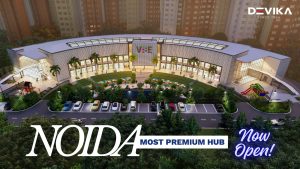
Planned commercial hubs approach the same requirement through a defined development. Their units and shared facilities are arranged according to the project’s design and intended use. For businesses that need a particular layout or a more structured setting, this can provide an alternative to premises in an older market.
2. Why Delhi NCR Offers Different Choices for Businesses
Delhi NCR is not a single, uniform property market. Its commercial character changes from one locality to another.
Old Delhi is associated with established wholesale trading, while parts of Noida and Gurugram have developed substantial office and retail activity. Other locations serve industrial businesses, local shopping needs and distribution operations.
This variety means buyers need to identify the purpose of a property before comparing options. A unit designed for customer-facing retail may not suit a business that handles bulk stock. Similarly, a location convenient for office employees may not be practical for frequent goods deliveries.
When exploring Commercial Property Investment in Delhi NCR, understanding these local differences helps buyers assess whether a particular property has a realistic market among its intended users.
3. Old Delhi’s Wholesale Economy and the Need for Suitable Premises
Sadar Bazar has an established place in Delhi’s wholesale trade. Its business ecosystem includes traders, distributors and retailers who depend on product availability and supplier relationships.
For businesses operating in such markets, proximity to trading contacts can be as important as the premises themselves. Buyers may return to the same area because they know its suppliers, understand its business practices and already have established customer relationships.
However, business requirements can change as operations expand. Storage, customer handling, delivery access and the arrangement of working space may become more important than they were when a business first started.
These requirements influence how traders assess alternative premises. Moving away from an established market can involve trade-offs, so the advantages of any new location need to be considered alongside the value of existing business connections.
4. Devika Sadar Bazar: Assessing a Property in Its Local Context
Devika Sadar Bazar provides a relevant point of reference when discussing commercial property in the context of Delhi’s established trading areas.
For prospective buyers, the important question is how the specific development fits their requirements. A business intending to occupy a unit will need to understand its usable area, permitted activities, access and available facilities. Someone considering leasing the unit will also need to examine likely tenant demand and comparable rental rates.
The surrounding market can provide useful context, but it should not replace a project-level assessment. Buyers should independently verify approvals, ownership documentation, possession conditions, maintenance charges and other applicable expenses.
This approach helps distinguish the general appeal of a trading district from the practical suitability of an individual property.
5. Which Features Matter Most in a Planned Commercial Development?
The right features depend on the activities the premises are expected to support.
A retail business may need a visible entrance and convenient customer access. A distributor may require suitable arrangements for receiving and dispatching goods. Businesses that receive regular visitors may place greater importance on parking and the movement of people through common areas.
Maintenance is another consideration. Buyers should understand how shared spaces are managed, which services are provided and whether additional charges apply.
These details are central to Commercial Real Estate Development in Delhi because the usefulness of a building depends partly on how its design supports the businesses operating there.
A planned layout alone does not establish that a property will attract tenants or appreciate in value. Its features must match local demand and the needs of potential occupants.
6. How to Evaluate the Financial and Legal Aspects
Before purchasing a commercial unit, buyers should establish the full financial commitment and confirm that the property can legally be used for the intended purpose.
The purchase price is only one part of the calculation. Registration expenses, applicable taxes, maintenance charges, fit-out costs and future repairs can affect the overall cost of ownership.
For a rental property, expected income should be assessed against comparable properties and realistic occupancy assumptions. A unit may remain vacant between tenants, and rental income may not cover every expense.
Legal checks are equally important. Ownership records, project approvals, permitted use and contractual terms should be reviewed before the transaction proceeds. Independent professional advice may be appropriate where documentation or obligations are unclear.
7. What Could Influence Demand for Commercial Space in the Coming Years?
Changes in business operations, consumer habits and distribution methods can affect the types of premises businesses require. Some may need more convenient access for customers, while others may prioritise storage, deliveries or proximity to their suppliers.
Local conditions will continue to matter. A development’s prospects may be influenced by competing properties, affordability, transport access and the number of businesses looking for similar spaces.
Investors should also separate confirmed developments from future proposals when evaluating a location. Expected improvements may not happen on the anticipated schedule, and their effect on an individual property can be difficult to predict.
Rather than assuming that every planned development will perform similarly, buyers should examine the specific factors that could support or limit demand in that area.
Conclusion
The demand for commercial premises in Delhi NCR reflects a wide range of business needs. Established wholesale markets provide access to long-standing trading networks, while planned developments offer different layouts and facilities for businesses seeking alternative premises.
Sadar Bazar illustrates the role of established trade in shaping a location’s business identity. Sadar Bazar can be considered within this broader context, with its suitability assessed through verified project information and the requirements of prospective occupants.
For anyone researching Commercial Real Estate in Delhi NCR, understanding the local business environment, checking legal documentation and calculating the complete cost of ownership are essential steps before making a decision.